

It’s one of the most overlooked parts of home maintenance, and one of the most important. Knowing how often to change a furnace filter can mean the difference between a system that runs efficiently for decades and one that breaks down ahead of its time. The good news is that it’s a simple task that takes just a few minutes – and staying on top of it pays off in lower energy bills, cleaner air, and fewer repair calls. If you want a professional set of eyes on your system alongside the basics, Foster’s HVAC maintenance services are available across Vancouver Island year-round.
Why Your Furnace Filter Matters
Your furnace filter does two important jobs. It protects your furnace’s internal components from dust, debris, and particulate buildup – and it plays a meaningful role in your home’s indoor air quality.
When a filter becomes clogged, airflow through the system is restricted. Your furnace has to work harder to pull air through, which puts extra strain on the blower motor and heat exchanger. Over time, that strain adds up. It increases energy consumption, accelerates wear on components, and can trigger safety shutoffs that leave you without heat.
Health Canada notes that indoor air quality is a significant factor in overall health – and a clean, functioning filter is one of the most accessible ways to maintain it.
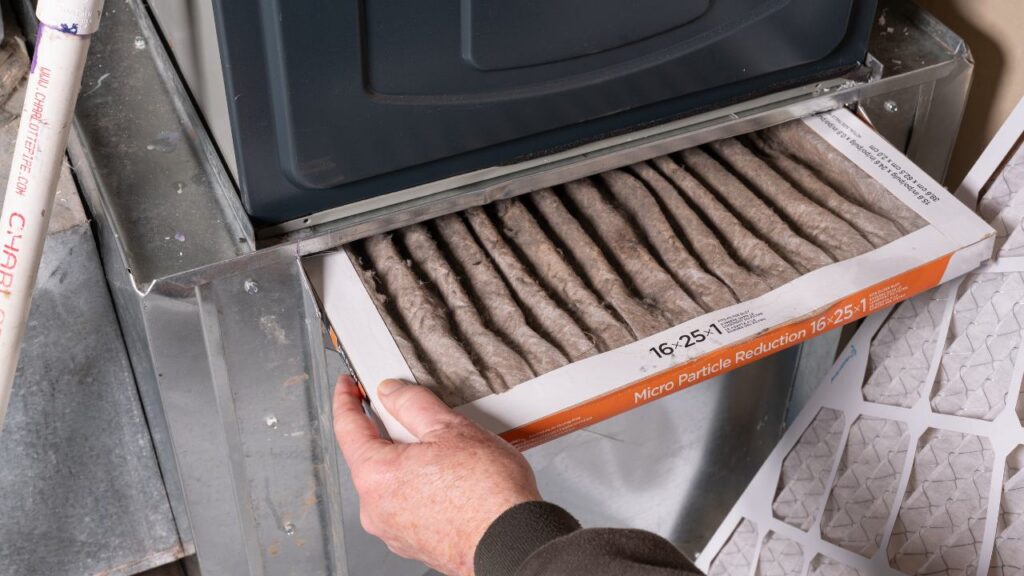
How Often to Change a Furnace Filter: The General Guidelines
The honest answer is that it depends on your filter type and your household. But here are the general rules of thumb most HVAC professionals work from.
One to two inch filters – These are the most common type found in residential furnaces. They should typically be replaced every one to three months. Homes with pets, higher dust levels, or occupants with allergies should lean toward the shorter end of that range.
Four to five inch filters – Thicker media filters have more surface area and last longer. These are generally replaced every six to twelve months, depending on usage and household conditions.
HEPA and high-efficiency filters – These capture smaller particles but can restrict airflow more quickly. Follow the manufacturer’s recommendation closely, and check them monthly if you run your system frequently.
When in doubt, check your filter monthly and replace it when it looks visibly grey or clogged – regardless of how long it’s been in place.
Factors That Affect How Often You Should Change Your Filter
The guidelines above are a starting point. Your specific situation may mean you need to change your filter more – or less – frequently.
Pets
Pet hair and dander clog filters faster than almost anything else. If you have one or more pets, plan on checking your filter every month and replacing it every four to six weeks.
Allergies or Respiratory Conditions
Households where someone has asthma, allergies, or another respiratory condition benefit from more frequent filter changes and higher-efficiency filters. Cleaner air starts with a filter that isn’t already saturated.
Number of Occupants
More people means more activity, more dust, and more airborne particles. A single-person home may get by with less frequent changes than a busy household of four or five.
How Often You Run the System
If your furnace runs constantly through the winter – as it does in many Canadian homes – the filter fills up faster than in a home where it runs only occasionally.
Construction or Renovation Work
If you’re doing any renovation or construction near your HVAC system, check and replace your filter immediately after the work is done. Construction dust is extremely fine and will saturate a filter quickly.
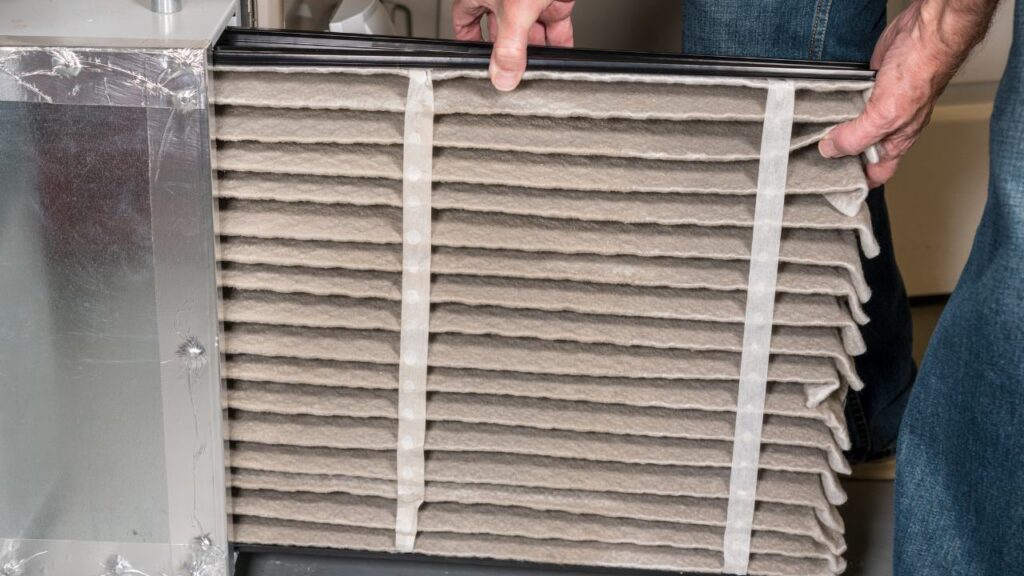
What Happens If You Don’t Change Your Filter Often Enough?
Skipping filter changes might not seem like a big deal in the short term – but the consequences build up over time.
A clogged filter forces your furnace to work harder to move air through the system. That extra strain raises your energy bills and wears out components faster. It can cause the heat exchanger to overheat, triggering a safety shutoff – which is often what leads to an emergency repair call in the middle of winter.
Reduced airflow also means your home heats less evenly, with some rooms staying cold while the furnace runs continuously trying to compensate.
A dirty filter is one of the leading causes of avoidable furnace breakdowns – and one of the easiest to prevent.
Choosing the Right Filter for Your Furnace
Filters are rated by their Minimum Efficiency Reporting Value, or MERV rating. The higher the MERV rating, the smaller the particles the filter captures – but also the more it restricts airflow.
For most residential furnaces, a MERV rating between 8 and 11 strikes a good balance between filtration quality and airflow. Going too high – MERV 13 and above – can actually strain your system unless it’s specifically designed to handle that level of restriction.
Check your furnace manual or ask a technician what MERV range your system is rated for. Using the wrong filter type can do more harm than good.
How to Check and Change Your Furnace Filter
It’s a straightforward process, but worth doing correctly.
Locate the filter slot – it’s usually found where the return air duct meets the furnace, or inside a dedicated filter compartment on the unit. Turn off your furnace before removing the filter. Slide the old filter out and take note of the arrow printed on the frame – it indicates airflow direction, and your new filter needs to go in the same way.
Hold the old filter up to the light. If you can’t see light through it, it’s time for a replacement. Insert the new filter with the arrow pointing toward the furnace, close the compartment, and turn the system back on.
Write the date on the side of the new filter with a marker so you know exactly when it was last changed.
Make Filter Changes Part of a Broader Maintenance Routine
Changing your filter regularly is a great habit – but it’s just one part of keeping your furnace in good working order. Annual professional servicing covers the things a filter change can’t: cleaning internal components, checking the heat exchanger, testing safety controls, and catching developing issues before they become expensive problems.
Scheduling a service visit before the heating season begins means your furnace is ready when you need it most, and you’re not left scrambling for a repair in the depths of winter.
A Small Habit With a Big Return
How often to change a furnace filter isn’t a complicated question – but it is an important one. For most homes, a monthly check and a replacement every one to three months is a reasonable rhythm. Adjust for your household, your filter type, and how hard your system is working.
It’s one of the lowest-effort maintenance tasks you can do, and one of the highest-return ones. A clean filter keeps your air cleaner, your energy bills lower, and your furnace running the way it should.
If you’d like a professional to assess your system and make sure everything is in order, Foster Heating & Cooling is here to help. We’ve been keeping homes across Vancouver Island comfortable since 1928. Get in touch with our team today.

Frequently Asked Questions
How often to change a furnace filter in a typical home?
For standard one to two inch filters, every one to three months is a good general guideline. Check it monthly and replace it when it looks visibly grey or clogged, regardless of how recently it was installed.
Does having pets mean I need to change my filter more often?
Yes. Pet hair and dander fill filters much faster than dust alone. If you have pets, plan on checking your filter every three to four weeks and replacing it roughly every month to six weeks.
Can a dirty filter damage my furnace?
Yes. A clogged filter restricts airflow, which forces your furnace to work harder. Over time this causes excessive wear on components, raises energy bills, and can trigger safety shutoffs or lead to breakdowns.
What MERV rating should I use for my furnace filter?
For most residential systems, a MERV rating between 8 and 11 is recommended. Higher ratings capture finer particles but can restrict airflow more than some systems are designed to handle. Check your furnace manual or ask a technician if you’re unsure.
Is it better to use a cheap filter and change it often, or an expensive filter and change it less?
Both approaches can work. A mid-range filter changed regularly tends to be the most practical solution for most households. Very cheap fibreglass filters offer minimal filtration, while very high-efficiency filters can restrict airflow if your system isn’t rated for them.
How do I know when my filter needs to be changed?
Hold it up to the light. If it looks grey or you can’t see light through it, replace it. If you write the installation date on the frame when you put it in, you’ll always know how long it’s been in place.