A furnace that’s running but pushing cold air through your vents is one of those problems that’s equal parts confusing and frustrating. The system sounds like it’s working, but your home isn’t getting any warmer. If you’re asking why is my furnace blowing cold air, the good news is that several of the most common causes are straightforward to identify – and some can be resolved without a service call at all. This guide walks you through what to check, what the likely causes are, and when it’s time to bring in a professional. If you already know you need help, Foster’s furnace services are available across Vancouver Island.
Start Here: A Few Quick Checks
Before working through the more involved possibilities, run through these basics first.
Check your thermostat settings. Make sure the thermostat is set to heat – not cool – and that the fan setting is on auto rather than on. If the fan is set to on, it runs continuously regardless of whether the furnace is actively heating. That means you’ll feel air blowing from the vents even when the furnace isn’t in a heating cycle, and that air will feel cool. Switching the fan back to auto is often all it takes to resolve this.
Check the temperature setting. If the set temperature is at or below the current room temperature, the furnace won’t call for heat – it’ll just sit idle while the fan runs. Raise the set temperature a few degrees above the current room reading and see if the system responds.
Give it a few minutes. When a furnace first starts up, it takes a short time for the heat exchanger to warm up before warm air begins flowing through the vents. If you’ve just turned the system on, wait a few minutes before concluding there’s a problem.
Common Reasons a Furnace Blows Cold Air
If the quick checks don’t resolve the issue, one of the following is likely behind it.
Overheating Due to a Clogged Filter
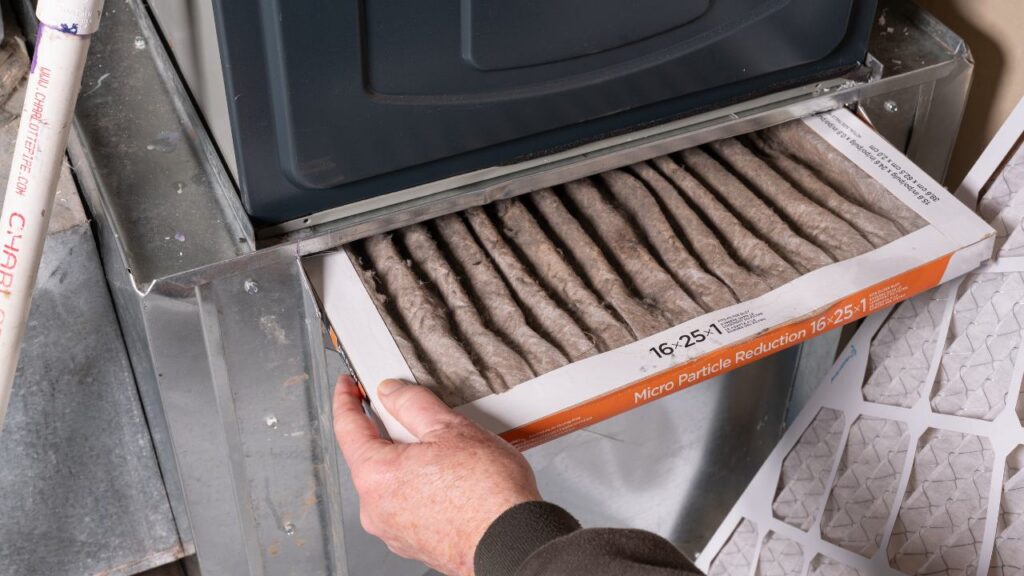
A dirty, clogged air filter restricts airflow through the system. When airflow is restricted, heat builds up around the heat exchanger and the furnace overheats. A safety component called the high-limit switch detects this and shuts the burners off to protect the system – but the blower fan keeps running to cool things down. The result is cold air blowing from the vents.
Pull your filter out and check it. If it’s heavily clogged, replace it and restart the furnace. This is one of the most common and easily preventable causes of a furnace blowing cold air.
Pilot Light or Ignition Failure
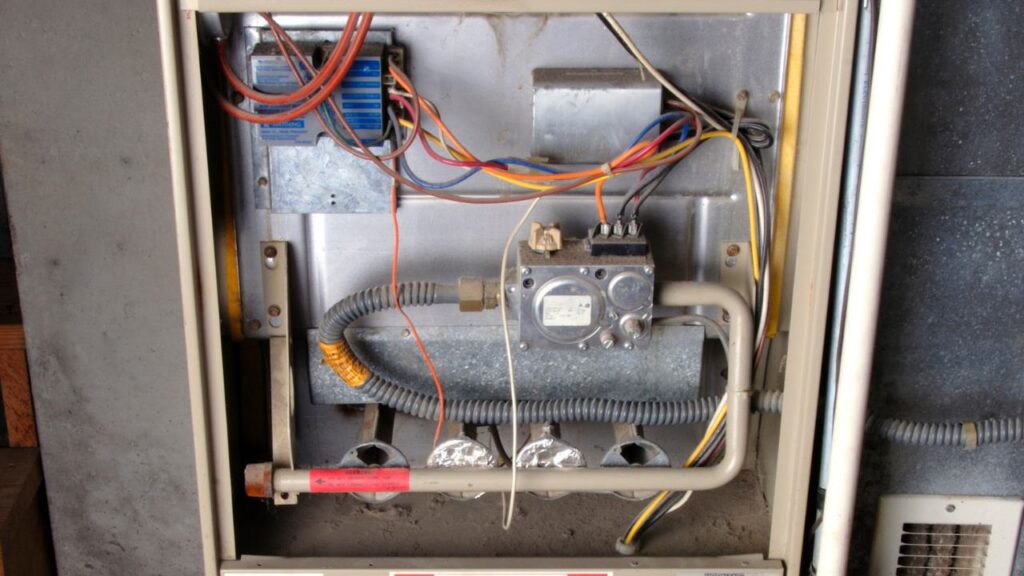
If your furnace can’t establish a flame, it can’t heat the air moving through it. The blower may still run, pushing unheated air through the vents. On older furnaces with a standing pilot light, the pilot may have gone out and simply need relighting following the instructions on the unit. Newer furnaces with electronic ignition require a technician to diagnose and repair ignition failures.
Flame Sensor Issues
The flame sensor confirms that a flame has been established before allowing the furnace to continue its heating cycle. When the sensor is coated in residue – which happens gradually over time – it can’t reliably detect the flame and shuts the burners off as a precaution. The blower continues running, and cold air flows through the vents.
A dirty flame sensor is one of the more common causes of a furnace that starts, runs briefly, and then loses heat. It’s a relatively minor repair but one that requires a technician.
Condensate Line Blockage
High-efficiency furnaces produce condensate as part of the combustion process. This moisture drains away through a condensate line. When that line becomes blocked – by debris, algae buildup, or freezing – the furnace triggers a safety shutoff. The burners cut out, but the blower keeps running. Checking whether the condensate line is clear and free of visible blockages is worth doing if you have a high-efficiency unit.
Leaking Ductwork
If your ducts have gaps, cracks, or poor connections, warm air can escape into unconditioned spaces like attics or wall cavities before it reaches your living areas. What arrives at the vents feels cool or lukewarm even though the furnace itself is working correctly. Duct leakage is a common and often underdiagnosed issue, and it can also affect your energy bills significantly.
Failed Heat Exchanger
The heat exchanger is the component that transfers heat from combustion gases to the air circulating through your home. If it cracks or fails, the furnace may shut the burners down as a safety measure – but again, the blower continues running and pushes cool air through the vents.
A cracked heat exchanger is a serious issue beyond the cold air problem. It can allow combustion gases including carbon monoxide to enter your living space. Health Canada advises that all homes have working carbon monoxide detectors installed near sleeping areas and on every level. If you suspect a heat exchanger issue, shut the system off and call a technician promptly.
Gas Supply Problems
If the furnace isn’t receiving gas, it won’t ignite and won’t produce heat – but the blower may still operate, circulating unheated air. Check that the gas valve on the supply line to the furnace is open, with the handle parallel to the pipe. If other gas appliances in your home are also not working, contact your gas provider to check the supply to the house.
Why Is My New Furnace Blowing Cold Air?
If your furnace is relatively new and blowing cold air, the cause is usually different from an aging system showing wear. Common culprits in newer systems include incorrect thermostat settings or fan modes, a tripped limit switch during the break-in period, or an installation issue affecting gas supply or ignition. If a new furnace is blowing cold air consistently, contact the installer to have it assessed – this isn’t something to troubleshoot on your own.
When to Call a Professional
Some of the causes above are safe to investigate yourself. Others require a licensed technician. Call for professional help if:
- Replacing the filter and adjusting thermostat settings doesn’t resolve the issue
- The furnace starts briefly and then loses heat repeatedly
- You suspect a heat exchanger problem or smell any unusual odours
- The ignition system appears to be failing
- You smell gas near the furnace – in which case leave the home immediately and call your gas provider and emergency services from outside
Staying on top of annual HVAC maintenance is the most effective way to prevent these issues from developing in the first place. A professional service visit covers filter checks, flame sensor cleaning, heat exchanger inspection, and every safety control – catching problems before they leave you with cold air on a cold day.
Preventing the Problem in the First Place
Most of the issues that cause a furnace to blow cold air are avoidable with basic upkeep. Change your filter every one to three months. Schedule professional servicing annually, ideally before the heating season begins. Keep vents and registers clear of furniture and obstructions so airflow through the system stays unimpeded.
A well-maintained furnace runs more reliably, lasts longer, and is far less likely to leave you standing in front of a vent wondering why the air coming out isn’t warm.

Getting Your Furnace Back on Track
Why is my furnace blowing cold air? In most cases, the answer comes down to one of a handful of common, diagnosable issues – a clogged filter, an ignition problem, a dirty flame sensor, or a safety control responding to something the system doesn’t like. Start with the simple checks, and if those don’t resolve it, a licensed technician can identify the cause quickly and get your heat running properly again.
Foster Heating & Cooling has been helping homeowners get their heating systems back on track since 1928. If your furnace is blowing cold air and you can’t pin down the cause, we’re here to help. Contact our team today and we’ll get things sorted.
Frequently Asked Questions
Why is my furnace blowing cold air even though it’s running?
The most common causes are a clogged filter triggering an overheat shutoff, incorrect thermostat fan settings, ignition or flame sensor failure, or a condensate line blockage. Start with thermostat settings and the filter before assuming a more serious issue.
Why does my furnace blow cold air when it first turns on?
It’s normal for a furnace to push slightly cool air for the first minute or two of a heating cycle while the heat exchanger warms up. If the air doesn’t warm up after a few minutes, there may be an underlying issue worth investigating.
Can a dirty filter cause my furnace to blow cold air?
Yes. A severely clogged filter restricts airflow, causes the furnace to overheat, and triggers the high-limit switch – which shuts the burners off while the blower keeps running. Replacing the filter and restarting the furnace sometimes resolves the issue entirely.
What does it mean if my furnace starts then blows cold air?
A furnace that starts and then switches to cold air is often dealing with a dirty flame sensor, a tripped limit switch, or an overheating issue. The burners shut down but the blower keeps running. This typically requires a professional diagnosis.
Is it safe to keep running my furnace if it’s blowing cold air?
In most cases it’s not dangerous to run the furnace briefly while troubleshooting, but if you smell gas or suspect a cracked heat exchanger, shut the system off immediately and call a technician. Don’t operate a furnace you suspect has a heat exchanger problem.
How do I stop my furnace from blowing cold air in the future?
Regular filter changes, annual professional servicing, and keeping vents clear are the most effective preventive measures. Most of the issues that cause a furnace to blow cold air develop gradually and are caught early with routine maintenance.